
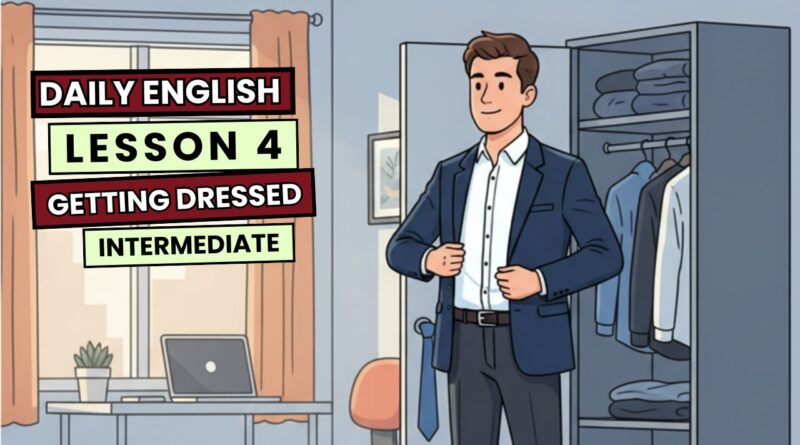
Daily English Lesson 4 – Getting Dressed (Intermediate)
Welcome to Daily English Lesson 4: Getting Dressed.
Getting dressed may sound simple, but it’s an essential part of daily life. The clothes we wear can influence our mood, confidence, and even how people see us. In this lesson, we’ll explore useful vocabulary and expressions about getting dressed, so you can talk naturally about your morning routine.
👉 This lesson is also available at the beginner level. Click here to read it.
📖 Story Section – Getting Dressed
My name is Daniel, and mornings are always a little chaotic for me. After taking a shower, I stand in front of my closet, trying to decide what to wear. Some days it feels overwhelming because there are too many choices.
I usually start with the basics: an undershirt and a pair of socks. Then I pick a shirt, often a clean, freshly ironed one. I like clothes that are simple but elegant, nothing too flashy. On weekdays, I have to dress more formally for work, so I usually put on a button-down shirt and trousers. Sometimes, I add a tie if I have an important meeting.
Weekends are different. I prefer something casual, like jeans and a comfortable hoodie. The freedom to dress in relaxed clothes makes me feel at ease. However, I still pay attention to details — I don’t want to look sloppy or careless.
One thing I’ve learned is that clothes can affect my confidence. When I wear something neat and well-fitted, I feel more prepared to face the day. On the other hand, if I’m in a rush and grab mismatched clothes, I feel slightly embarrassed later.
Getting dressed may seem like a small part of the morning, but it sets the tone for the rest of my day.
🗣️ Story Section with explanations
Our story begins with me saying, “Let me tell you a little story.”
My name is Daniel, and mornings are always a little chaotic (disorganized, confusing, without order). After I take a shower, I stand in front of my closet (a small room or space where you keep your clothes), trying to decide what to wear. Sometimes it feels overwhelming (too much, difficult to manage) because I have too many choices.
I usually begin with the basics (the most simple and important things). I put on an undershirt (a thin shirt you wear under your main shirt) and a pair of socks. Then I choose a shirt, often one that is freshly ironed (made smooth with a hot tool called an iron).
On weekdays, I have to dress more formally (in a serious or professional style). I usually wear a button-down shirt (a shirt with buttons in the front) and a pair of trousers (formal pants). If I have an important meeting, I add a tie (a long, narrow piece of cloth worn around the neck).
Weekends are different. I like to wear something casual (relaxed, informal, comfortable). I often choose jeans (casual pants made from denim) and a comfortable hoodie (a sweatshirt with a hood). Dressing casually gives me a feeling of ease (comfort, relaxation). But still, I don’t want to look sloppy (untidy, messy).
I’ve realized that clothes can affect my confidence (belief in yourself, feeling sure about what you do). When I wear something well-fitted (the right size for my body), I feel ready to face the day. But if I’m in a rush and put on mismatched (not matching in color or style) clothes, I feel a little embarrassed (feeling uncomfortable because of mistakes).
Getting dressed may seem like a small part of the morning, but it sets the tone (the general mood or feeling) for everything that comes afterward.
📝 Vocabulary & Explanation
- Chaotic – very disorganized.
Example: The classroom was chaotic after the party. - Closet – a small space for keeping clothes.
Example: She keeps her shoes in the closet. - Overwhelming – too much to handle.
Example: The amount of homework was overwhelming. - Basics – the most important simple things.
Example: Start with the basics before learning advanced skills. - Ironed – made smooth with heat.
Example: His shirt looked fresh and ironed. - Formally – in a professional way.
Example: She dressed formally for the job interview. - Button-down shirt – a shirt with buttons in the front.
Example: He wore a white button-down shirt to work. - Casual – relaxed, informal.
Example: We usually wear casual clothes on weekends. - Sloppy – untidy or messy.
Example: His sloppy clothes made him look unprepared. - Confidence – belief in yourself.
Example: Speaking English every day builds confidence. - Mismatched – not matching.
Example: He wore mismatched socks by mistake. - Embarrassed – feeling uncomfortable after a mistake.
Example: She felt embarrassed when she forgot her lines.
🔁 Recap (150–200 words)
Daniel begins his morning by showering and standing in front of his closet. Sometimes he feels overwhelmed by the choices. He starts with the basics: an undershirt and socks. On weekdays, he dresses formally, wearing a button-down shirt and trousers, sometimes with a tie. On weekends, he prefers casual clothes like jeans and a hoodie.
Daniel has noticed that clothes affect his confidence. When he wears neat, well-fitted clothes, he feels ready to face the day. But if he rushes and wears mismatched clothes, he feels embarrassed.
For Daniel, getting dressed is more than just putting on clothes — it sets the tone for his whole day.
📚 Glossary
- Chaotic – disorganized.
- Closet – space for clothes.
- Overwhelming – too much to manage.
- Basics – most important simple things.
- Ironed – made smooth with heat.
- Formally – in a professional way.
- Button-down shirt – shirt with buttons.
- Casual – relaxed, informal.
- Sloppy – messy, untidy.
- Confidence – belief in yourself.
- Mismatched – not matching.
- Embarrassed – uncomfortable after a mistake.
🏆 Practice Task
👉 Write 6–8 sentences about how you get dressed in the morning.
Try using today’s vocabulary. For example: Do you dress casually or formally? Have you ever worn mismatched clothes?
👏 Great work today! Remember, the way you dress can change how you feel. Practice today’s vocabulary when you talk about your morning routine. Come back for the next Daily English Lesson — step by step, you’re building confidence in English!