
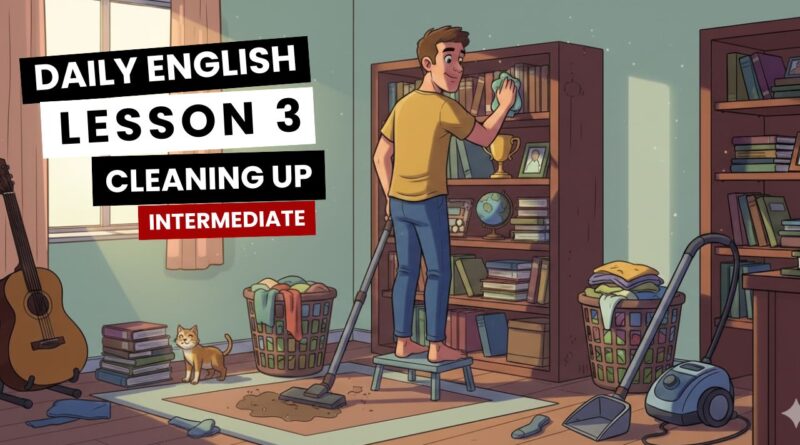
Daily English Lesson 3 Cleaning Up (Intermediate)
👋 Welcome to Daily English Lesson 3 Cleaning Up – (Intermediate)
Keeping your space clean is not only good for health but also for peace of mind. Learning how to talk about cleaning in English helps you describe daily routines, habits, and even feelings when things get messy. In this lesson, you’ll practice useful vocabulary and expressions about cleaning up.
👉 This lesson is also available at the beginner level. Click here to read it.
🧹Cleaning Up
Hi, my name is Daniel, and I live in a small apartment in Anchorage, Alaska. Life in a small space can be cozy, but sometimes it gets messy quickly. Books pile up on the floor, dishes wait in the sink, and clothes spread across the sofa.
Last weekend, I looked around my apartment and realized it was time for a serious cleaning. At first, I felt overwhelmed, because everywhere I looked, there was something to do. Still, I knew I would feel better once the work was finished.
I began in the kitchen. I washed the dishes, wiped the counters, and organized the cupboards. Slowly, the kitchen started to shine again. After that, I moved into the living room, where old papers and magazines had been collecting dust. I sorted them carefully—some were important, but most went straight into the recycling bin.
Next, I focused on my bedroom. Folding clothes took patience, but it gave me satisfaction to see everything in order. I also vacuumed the carpet and changed the bedsheets, which made the whole room feel fresh.
By the evening, I was tired but proud. The apartment felt lighter, more peaceful, and more welcoming. Sitting on my clean sofa, I realized that cleaning up is not just about removing dirt. It’s about creating space for calm and comfort in everyday life.
🗣️ Vocabulary & Explanation
Our story begins with me saying, “Let me tell you a little story.”
I live in a small apartment (a home in a building with many other homes). An apartment is smaller than a house, so things can get messy faster.
Sometimes my place becomes cluttered (filled with too many things, not organized). There are books on the floor, dishes in the sink, and clothes on the sofa.
Last weekend, I looked around and felt overwhelmed (when something feels too big or too much to handle). I thought, “If I don’t clean today, my home will be spoiled (ruined, not good anymore).”
I started in the kitchen. I had to wash (clean with water) the dishes. Washing dishes is simple but takes time. When I finished, I felt relieved (feeling better after being stressed).
Then I wiped the counters and put things away in the cupboards (shelves or storage spaces in the kitchen). Now, the kitchen began to look more organized (everything in the right place).
Next, I moved into the living room. There were boxes of papers and magazines. Some papers were essential (very important, necessary), but others were just trash. I decided to recycle the useless ones.
Cleaning was exhausting (making me very tired), but I continued step by step. I even opened the window to let in fresh air. Fresh air made the apartment feel more peaceful (calm, quiet).
Finally, I went into my bedroom. I folded clothes, vacuumed the carpet, and changed the sheets. To vacuum (clean with a machine that sucks up dust) is tiring, but it makes the room look new.
At the end of the day, I sat on the sofa. The apartment was clean, quiet, and welcoming (pleasant and comfortable). I realized that before, I felt deprived (lacking something needed) of peace. But after cleaning, I had created a space where I could finally relax.
Cleaning up wasn’t fun, but it gave me something valuable: comfort and calm at home.
📝 Vocabulary & Explanation
- Apartment – a home inside a larger building.
Example: She lives in a small apartment downtown. - Cluttered – full of too many things, messy.
Example: His desk is always cluttered with papers. - Overwhelmed – feeling something is too much to handle.
Example: She felt overwhelmed by the amount of homework. - Spoiled – ruined or no longer good.
Example: The fruit was spoiled after sitting too long. - Wash – to clean with water.
Example: I need to wash the car this weekend. - Relieved – feeling better after stress or worry.
Example: He was relieved when the test was finished. - Cupboards – shelves or storage spaces in the kitchen.
Example: The plates are in the cupboard above the sink. - Organized – arranged in a neat, orderly way.
Example: She keeps her files organized on her desk. - Essential – very important, necessary.
Example: Water is essential for life. - Exhausting – very tiring.
Example: Running a marathon is exhausting. - Peaceful – calm and quiet.
Example: The garden was peaceful in the morning. - Welcoming – friendly and comfortable.
Example: Their home felt warm and welcoming. - Deprived – not having something needed.
Example: The children were deprived of sleep.
🔁 Recap (150–200 words)
Daniel lives in a small apartment in Anchorage. Over time, his apartment became cluttered, with books, dishes, and clothes everywhere. One weekend, he decided to clean.
He started in the kitchen by washing the dishes, wiping the counters, and organizing the cupboards. Then, he moved into the living room and sorted through papers and magazines, keeping the essential ones and recycling the rest.
In the bedroom, Daniel folded clothes, vacuumed the carpet, and changed the sheets. The work was exhausting, but the fresh air and clean rooms made the apartment peaceful and welcoming.
At the end of the day, Daniel felt relieved and no longer deprived of comfort. He realized that cleaning was not just about removing dirt but about creating a calm space to enjoy life.
📚 Glossary
- Apartment – a home in a building
- Cluttered – messy, too many things
- Overwhelmed – feeling something is too much
- Spoiled – ruined, not good
- Wash – clean with water
- Relieved – feeling better after stress
- Cupboards – kitchen storage spaces
- Organized – neat, orderly
- Essential – very important
- Exhausting – very tiring
- Peaceful – calm, quiet
- Welcoming – friendly, comfortable
- Deprived – lacking something needed
🏆 Practice Task
Write 6–8 sentences about cleaning your own room or house. Use today’s vocabulary. For example:
- “My desk is cluttered with papers.”
- “I feel relieved when my room is organized.”
✅ Closing Line
Thanks for joining Daily English Lesson 3: Cleaning Up. Remember, a clean space helps you feel peaceful and focused. Keep practicing today’s words in your daily life, and I’ll see you in the next lesson.