
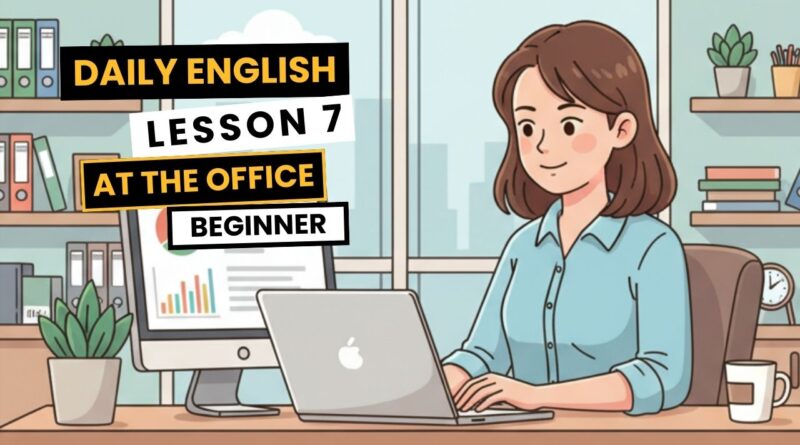
Daily English Lesson 7 – At the Office (Beginner)
Welcome to Daily English 7 – At the Office (Beginner Lesson). Today, I’ll share my story about starting a new office job and how I learned to manage tasks, meet deadlines, and work with my colleagues. This lesson will help you learn useful office vocabulary and phrases.
👉 Click here for the intermediate version of this lesson.
📖 Story Section – At the Office
I started my new job last Monday, and I was excited but a little nervous. On my first day, my manager gave me several tasks to complete. Some were simple, like organizing files, and others were part of a larger project that would take several days. I wrote everything down so I could remember the details and meet each deadline.
I worked closely with a friendly colleague who explained how the office system worked. We often had to collaborate on certain tasks, sharing ideas and checking each other’s work. This made everything easier and faster.
I also learned to organize my day carefully. I made a schedule for the morning and afternoon and decided which task was my priority. Planning like this helped me stay focused and efficient.
During lunch, I joined my team in the cafeteria. We talked about our projects, shared ideas, and gave advice to each other. It was nice to feel connected and supported by my coworkers.
In the afternoon, I finished my tasks, checked my list again, and prepared a short report for my manager. By the end of my first week, I felt proud. I had completed my tasks on time, met deadlines, and learned to work well with others. The office no longer felt overwhelming—it felt like a place where I could learn, grow, and build friendships while doing meaningful work.
🗣 Story Section with explanations
Let me tell you a little story.
I started my new job last Monday. My manager gave me several tasks (pieces of work I needed to do). Some were simple, like organizing files. Others were part of a bigger project (a group of tasks to reach a goal). Each task had a deadline (the day or time it must be finished). I wrote everything down so I would not forget.
I worked with a friendly colleague (someone who works with me). We often had to collaborate (work together) on tasks, sharing ideas and checking each other’s work. This made the work easier and faster.
I learned to organize (arrange my tasks in order) my day. I made a schedule (plan of when to do tasks) for the morning and afternoon. I decided which task was my priority (most important thing to do first). Planning this way helped me stay efficient (working well and fast).
During lunch, I joined my team (a group of people working together) in the cafeteria. We talked about our projects, shared ideas, and gave advice to each other. I felt connected (part of the group) and happy.
In the afternoon, I finished my tasks, checked my list, and prepared a short report (a document about my work) for my manager. By the end of my first week, I felt proud. I had completed my tasks on time, met deadlines, and learned to work well with others. The office was no longer overwhelming—it was a place where I could learn, grow, and make friends.
📚 Vocabulary & Explanation
Task – a piece of work to do.
Example: My first task today was to write a short report.
Project – a set of tasks to reach a goal.
Example: We are working on a new marketing project.
Deadline – the day or time when something must be finished.
Example: I have a deadline for my project tomorrow.
Colleague – a person you work with.
Example: My colleague helped me finish the report.
Manager – the person in charge at work.
Example: My manager explained the new tasks to me.
Report – a document with information about work.
Example: I wrote a report about our sales.
Schedule – a plan for when things will happen.
Example: My schedule shows I have a meeting at 10 a.m.
Organize – to arrange or plan things in order.
Example: I organized my tasks for the week.
Team – a group of people working together.
Example: I work in a team with three colleagues.
Collaborate – to work together with someone.
Example: I collaborated with my team on the new project.
Efficient – doing work in a good and fast way.
Example: Using a checklist helps me be more efficient.
Priority – the most important thing to do first.
Example: I put my tasks in order of priority.
📝 Recap
I started my first week at the office feeling excited and nervous. My manager gave me several tasks, some simple and others part of bigger projects with deadlines. I wrote everything down and made a schedule to stay organized and efficient.
I worked closely with a colleague and we often collaborated on tasks, which made the work easier. I learned to prioritize my most important tasks first.
During lunch, I joined my team, talked about projects, and shared ideas. This made me feel connected and supported. By the end of the week, I felt proud. I had finished my tasks, met deadlines, and worked well with others. The office became a place where I could learn, grow, and build friendships.
📖 Glossary
- Task – a piece of work to do
- Project – a set of tasks to reach a goal
- Deadline – when something must be finished
- Colleague – a person you work with
- Manager – the person in charge
- Report – a document with information
- Schedule – plan of when tasks happen
- Organize – arrange or plan in order
- Team – a group of people working together
- Collaborate – work together with someone
- Efficient – working well and fast
- Priority – most important thing to do first
✍️ Practice Task
Write 5–6 sentences about your own school, work, or study day using today’s vocabulary. Include task, project, deadline, collaborate, and priority.
Practice these office words—task, project, deadline, and collaborate—in your own work or school life. Keep learning, and come back for the next Daily English Lesson!