
25 Alternatives to Saying I Don’t Know in English (Sound Fluent & Polite)
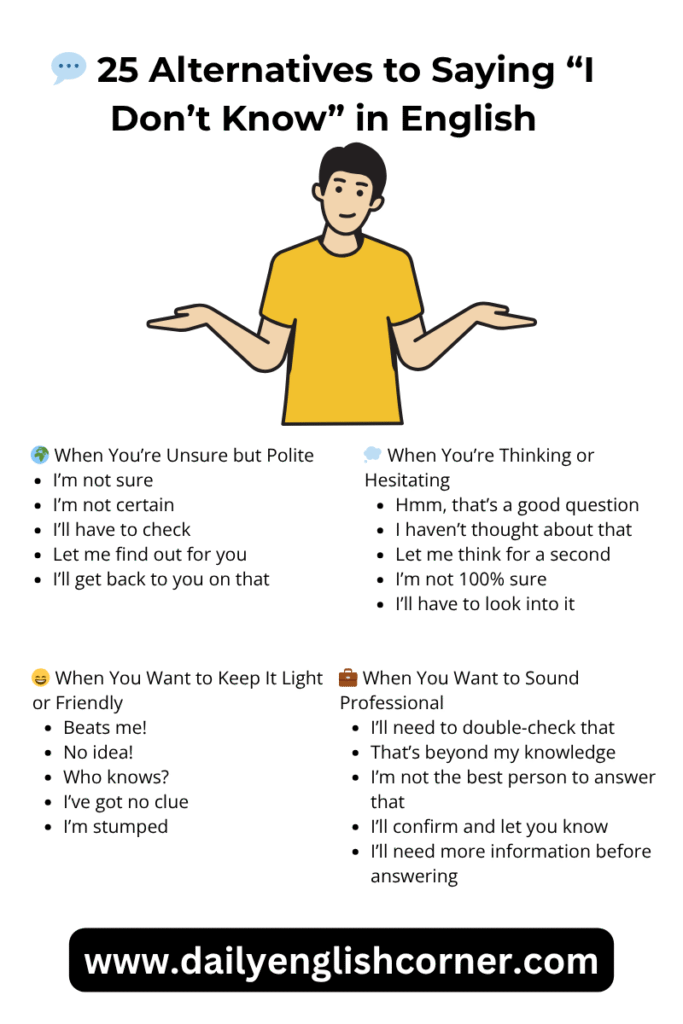
Want to sound more confident in conversations? Here are 25 natural alternatives to saying “I don’t know” in English that make you sound fluent and polite.
🤔 Have You Ever Been Stuck for Words?
Imagine you’re in class or chatting with a friend, and someone asks a question you can’t answer. You freeze, smile awkwardly, and mumble: “I don’t know.”
We’ve all been there! So today, let’s explore 25 Alternatives to Saying “I Don’t Know” in English – phrases you can use in daily conversation to sound more confident and fluent.
When You’re Unsure but Want to Sound Polite
1. I’m not sure.
“I’m not sure if he’s coming today.”
2. I’m not certain.
A softer and more formal way to admit you’re unsure.
3. I’ll have to check.
Great for work or study situations — it shows responsibility.
4. Let me find out for you.
Sounds helpful and professional!
5. I’ll get back to you on that.
Perfect for business or email conversations.
When You’re Thinking or Hesitating
6. Hmm, that’s a good question.
A natural way to buy time while you think.
7. I haven’t thought about that.
Honest and conversational.
8. Let me think for a second.
Sounds natural and shows you’re considering the question.
9. I’m not 100% sure.
Casual and friendly — good for informal chats.
10. I’ll have to look into it.
More formal – great for work or study contexts.
When You Want to Keep It Light or Friendly
11. Beats me!
Very casual, often used among friends.
“Where’s Jack?” “Beats me!”
12. No idea!
Quick and natural, but keep it casual.
13. Who knows?
Used humorously to show uncertainty.
“Will it rain tomorrow?” “Who knows?”
14. I’ve got no clue.
Friendly, informal version of “I don’t know.”
15. I’m stumped.
Means you really can’t figure it out.
“This math problem has me stumped!”
When You Want to Sound Professional or Diplomatic
16. I’ll need to double-check that.
Sounds responsible and smart in professional settings.
17. That’s beyond my knowledge.
A polite and formal way to admit it’s not your area.
18. I’m not the best person to answer that.
Great for meetings or interviews.
19. I’ll confirm and let you know.
Confident, helpful, and proactive.
20. I’ll need more information before answering.
Used in professional or academic discussions.
When You Want to Keep the Conversation Going
21. What do you think?
A great way to turn the question back politely.
22. I’m not sure, but maybe…
Adds your opinion while showing humility.
23. I don’t think anyone really knows!
Fun and natural for uncertain situations.
24. I haven’t figured it out yet.
Suggests you’re still learning — honest and open.
25. I’m still working on that answer.
Shows curiosity and a positive attitude!
Why You Should Use Alternatives to Saying “I Don’t Know” in English
Using varied expressions makes you sound:
✅ More fluent
✅ More confident
✅ More polite and natural
It’s not about avoiding “I don’t know” completely — it’s about choosing the right tone and situation. Sometimes “I’m not sure” sounds softer, and sometimes “Beats me!” fits better with friends.
If you liked learning new ways to sound natural, check out our related post 👉 25 Natural Ways to Say Goodbye in English
❓ FAQ – Alternatives to Saying “I Don’t Know” in English
1. What can I say instead of “I don’t know” in English?
You can say “I’m not sure,” “Let me find out,” “Beats me,” or “That’s a good question.” These sound natural and polite.
2. How can I sound confident when I don’t know something?
Use phrases like “I’ll check and get back to you” — they show responsibility and confidence.
3. Is it rude to say “I don’t know”?
Not always, but sometimes it can sound too short. Adding a polite phrase makes it sound friendlier.
4. What’s the best professional alternative to “I don’t know”?
Try “I’ll confirm and let you know” or “I’ll need to look into that.” Perfect for emails or meetings.
✅ Key Takeaway
You don’t have to avoid “I don’t know” completely – just add variety!
Mix polite, funny, and confident alternatives depending on who you’re talking to.