
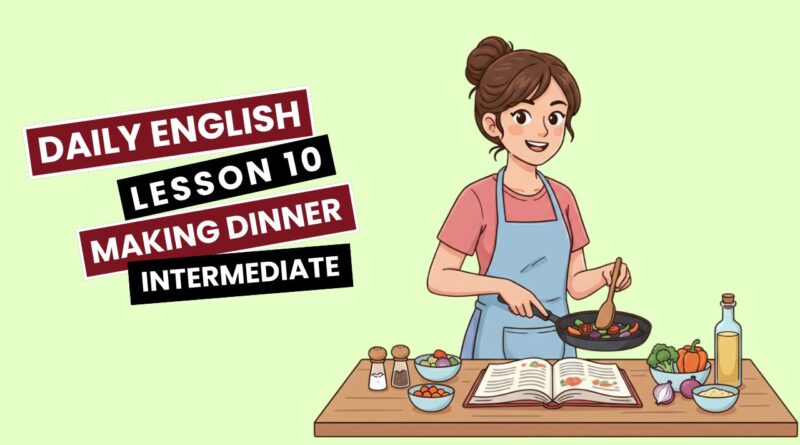
Daily English Lesson 10 – Making Dinner (Intermediate)
Welcome back to your daily English practice! Today’s lesson is Daily English Lesson 10 – Making Dinner, where we follow Sophia as she prepares a meal after a long day. This lesson helps learners understand intermediate kitchen and cooking vocabulary, while practicing reading comprehension.
👉 This lesson is also available at the beginner level. Click here to read it.
📖 Story Section – Making Dinner
After a long day at work, I came home feeling drained, but I wanted to make a nourishing dinner. I looked in my kitchen and saw chicken, fresh spinach, tomatoes, rice, and some herbs. It wasn’t an elaborate meal, but it would be satisfying.
I started by marinating the chicken with lemon juice, garlic, and chili. While it absorbed the flavors, I chopped the vegetables, enjoying the rhythm of the knife on the cutting board. The aroma of garlic and lemon filled the kitchen, making it warm and inviting.
Next, I heated a sauté pan and carefully seared the chicken until golden brown. At the same time, I boiled the rice until it was tender and fluffy. I then lightly sautéed the spinach and tomatoes, letting them retain their vibrant colors and textures.
Once everything was ready, I plated the meal, drizzled a little olive oil on top, and garnished it with fresh parsley. Sitting down to eat, I felt a sense of accomplishment. Cooking wasn’t just about food; it was a ritual that helped me focus and enjoy a small creative project after a busy day.
The process of chopping, marinating, sautéing, and plating gave me calm. Even a simple dinner felt special. I savored each bite and appreciated the balance of flavors. By the time I finished, I felt nourished not just physically but mentally too, ready to relax for the evening.
🗣️ Story Section with explanations
Our story begins with me saying, “Let me tell you a little story.”
After a long day at work, I came home feeling drained (extremely tired and lacking energy). Even though I was exhausted, I wanted to make a meal that was nourishing (providing the substances needed for health and growth) and satisfying. I looked around my kitchen and saw chicken, fresh spinach, tomatoes, rice, and herbs. It wasn’t a fancy meal, but I knew it could be enjoyable.
I began marinating (soaking food in a flavored liquid) the chicken with lemon juice, garlic, and chili. While the chicken absorbed the flavors, I chopped the vegetables carefully. I focused on the rhythm (a regular, repeated pattern) of the knife hitting the cutting board. The aroma (a pleasant smell) of garlic and lemon filled the kitchen, making it feel warm and inviting.
Next, I heated a sauté pan (a wide, shallow pan for lightly frying) and seared (browned the surface quickly) the chicken until it had a golden color. At the same time, I boiled the rice until it was soft and fluffy. Then I sautéed (lightly fried while stirring) the spinach and tomatoes, letting them retain their vibrant colors and textures.
Once everything was cooked, I plated (arranged food on a plate) the rice, vegetables, and chicken. I drizzled (poured lightly) a bit of olive oil on top and garnished (decorated) it with fresh parsley. Sitting down at the table, I felt a strong sense of accomplishment (pride in completing something successfully).
Cooking for me was more than preparing food; it was a ritual (a habitual or meaningful activity) that helped me unwind (relax after stress) and focus my mind. Each action-from chopping the vegetables to marinating the chicken-was an opportunity to be mindful and creative. I enjoyed the creativity (using imagination to make something unique) involved in combining flavors, textures, and colors.
The kitchen felt alive with the sizzle (hissing sound while cooking) of the chicken and the aroma of herbs. Each small task, like sprinkling parsley or flipping the chicken, gave me a sense of control and satisfaction. Even though the meal was simple, the process turned an ordinary evening into a calm and enjoyable experience.
Eating the dinner, I savored each bite, appreciating how the flavors came together. The combination of tender chicken, fluffy rice, and sautéed vegetables made the meal balanced (well-arranged and harmonious). By the end, I felt not just physically nourished but mentally refreshed. Cooking allowed me to take a pause from the busy day and focus on something creative and fulfilling.
📚 Vocabulary & Explanation
- Drained – extremely tired and without energy.
Example: After running the marathon, I felt completely drained. - Nourishing – providing the substances necessary for health and growth.
Example: Soup with vegetables is very nourishing. - Marinate – to soak food in a flavored liquid.
Example: I marinated the chicken overnight for better flavor. - Rhythm – a repeated pattern in an action or sound.
Example: She worked to the rhythm of the music while cleaning. - Aroma – a pleasant smell.
Example: The aroma of fresh bread filled the kitchen. - Sauté pan – a wide, shallow pan for lightly frying food.
Example: I cooked the vegetables in a sauté pan. - Sear – to brown the surface of food quickly.
Example: I seared the steak to lock in the juices. - Plated – arranged food on a plate for serving.
Example: He plated the dessert beautifully. - Drizzle – to pour a small amount over food.
Example: I drizzled olive oil on the salad. - Garnish – to decorate food with small amounts of something.
Example: She garnished the soup with parsley. - Accomplishment – feeling proud of completing a task.
Example: Finishing the project gave me a sense of accomplishment. - Ritual – a habitual or meaningful activity.
Example: Drinking tea every morning is her daily ritual.
📝 Recap
Sophia returned home feeling drained after a long day at work but decided to make a nourishing dinner. She marinated the chicken with garlic, lemon, and chili, then chopped the vegetables while enjoying the rhythm of the knife and the aroma of garlic filling the kitchen.
She heated a sauté pan and seared the chicken, boiled the rice, and sautéed the spinach and tomatoes. Sophia then plated the meal, drizzled olive oil on top, and garnished it with fresh parsley.
Cooking gave her a sense of accomplishment and served as a ritual that allowed her to unwind. The process of preparing the meal was mindful and creative, turning an ordinary evening into a calm and satisfying experience. Eating the meal, she felt nourished physically and mentally, appreciating the flavors and textures she had carefully combined.
📔 Glossary
- Drained – extremely tired
- Nourishing – providing nutrients
- Marinate – soak food in a flavored liquid
- Rhythm – repeated pattern
- Aroma – pleasant smell
- Sauté pan – pan for lightly frying
- Sear – brown surface quickly
- Plated – arranged food on a plate
- Drizzle – pour lightly
- Garnish – decorate food
- Accomplishment – pride in completing a task
- Ritual – habitual or meaningful activity
📝 Practice Task
Write 6–8 sentences about a meal you cooked recently. Use at least 5 of today’s vocabulary words. Practice saying them aloud to improve fluency.
✅Thanks for joining today’s lesson! Remember to practice today’s vocabulary when you cook or describe meals. Come back for the next lesson and continue building your English skills in everyday life.