
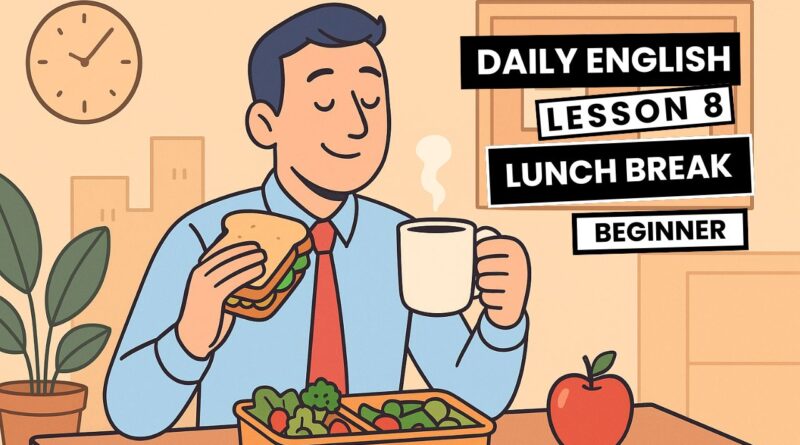
Daily English Lesson 8 – Lunch Break (Beginner)
Welcome back to our Daily English series! Today’s topic is Daily English 8 – Lunch Break. Lunchtime is an important part of the workday, not just for eating but also for relaxing and connecting with others. In this lesson, we’ll explore useful vocabulary and expressions for lunch breaks.
👉 This lesson is also available at the intermediate level. Click here to read it.
📖 Story Section – Lunch Break
My name is Daniel, and I want to tell you about my usual lunch break. Every day around 1 p.m., I stop working and prepare for a short rest. Sometimes I bring food from home, but other times I go out with my colleagues.
When I pack lunch at home, I usually make a sandwich, some fruit, and a bottle of water. It saves money and is often healthier. But when I join my colleagues, we usually walk to a small café near the office. The place is always busy at lunchtime, and we sometimes have to wait for a table.
During the break, I like to talk with my colleagues about things other than work. We chat about movies, travel, or even funny stories. Having these conversations helps me feel relaxed and connected. I think it is essential to take a real break, not just eat quickly at my desk.
After eating, I often take a short walk outside. Even ten minutes in the fresh air makes me feel refreshed and ready for the afternoon. When I return to the office, I drink a cup of tea and check my schedule for the rest of the day.
My lunch break is not very long, but it’s an important part of staying healthy and balanced. Eating well, relaxing, and talking with others gives me new energy to finish my work with more focus.
🐢 Story Section with explanations
Our story begins with me saying, “Let me tell you a little story.”
Every day, around 1 p.m., I stop working and prepare for my lunch break (a short time to rest and eat in the middle of the day). Sometimes I bring food from home. Other times, I go out with my colleagues (people you work with).
When I prepare food at home, I usually make a sandwich (two pieces of bread with food between them), some fruit (food that grows on trees or plants, like apples or bananas), and a bottle of water (clear liquid we drink). Packing lunch saves money and is often healthier (better for the body).
But sometimes, I join my colleagues at a small café (a place where you can buy drinks and simple meals) near the office. At lunchtime, the café is usually busy (full of people, very active). Sometimes, we have to wait (spend time until something happens) for a table.
During lunch, I like to talk with my colleagues about things that are not work-related. We have conversations (when people talk and share ideas) about movies, travel, or funny stories. Talking in this way makes me feel more relaxed (calm, not stressed) and more connected (feeling close to other people).
I believe it is essential (very important, necessary) to take a real break. If you eat quickly at your desk, you don’t feel the same energy.
After eating, I often take a short walk (moving on foot). Even ten minutes in the fresh air (clean air outside, not inside a room) makes me feel refreshed (feeling better and full of new energy). When I return to the office, I drink a cup of tea (a hot drink made from dried leaves) and check my schedule (a plan for when things happen).
My lunch break is not long, but it helps me stay balanced (healthy and not stressed). Eating well, relaxing, and talking with others gives me new energy to finish my work with focus.
📚 Vocabulary & Explanation
- Colleague – a person you work with.
Example: I had lunch with my colleague today. - Café – a small restaurant serving drinks and light meals.
Example: We met at a café near the office. - Busy – full of people or activity.
Example: The café was busy at lunchtime. - Conversation – talking and sharing ideas with someone.
Example: We had a conversation about movies. - Relaxed – calm, free from stress.
Example: I felt relaxed after lunch. - Connected – feeling close to people.
Example: Talking with friends makes me feel connected. - Essential – very important or necessary.
Example: Drinking water is essential on a hot day. - Refreshed – feeling better with new energy.
Example: A short nap made me feel refreshed. - Schedule – a plan of things to do and times to do them.
Example: My schedule shows a meeting at 3 p.m. - Balanced – in good condition, not stressed or tired.
Example: Exercise helps me feel balanced. - Fresh air – clean air from outside.
Example: She opened the window to enjoy the fresh air. - Priority – something important that must be done first.
Example: Finishing this report is my top priority.
🔄 Recap
In today’s story, I talked about my typical lunch break at work. Sometimes I bring food from home, like a sandwich, fruit, and water. Other times, I go out with colleagues to a café near the office. The café is usually busy, but it’s enjoyable to talk with my colleagues about different topics. These conversations make me feel relaxed and connected.
I believe it’s essential to take a real break instead of eating quickly at my desk. After lunch, I often take a short walk in the fresh air, which leaves me feeling refreshed and ready for the afternoon. Back in the office, I check my schedule and continue my work.
Although lunch breaks are short, they play an important role in staying balanced and productive. Eating well, talking with others, and resting for a while gives me energy to finish the day with focus and motivation.
📑 Glossary
- Colleague – person you work with.
- Café – small restaurant with drinks and meals.
- Busy – full of people or activity.
- Conversation – when people talk and share ideas.
- Relaxed – calm, not stressed.
- Connected – feeling close to others.
- Essential – very important or necessary.
- Refreshed – feeling better and full of energy.
- Schedule – plan for activities and times.
- Balanced – healthy, not stressed.
- Fresh air – clean air outside.
- Priority – most important thing to do first.
✏️ Practice Task
Write 6–8 sentences about your own lunch break. Use today’s vocabulary. For example, describe what you eat, where you go, and how you feel after the break. Try to practice aloud or share with a friend.
✅ Thank you for joining today’s Daily English Lesson! Remember, your lunch break is not just for food-it’s for relaxing, connecting, and refreshing your mind. Try using today’s vocabulary in real life, and come back for the next lesson to keep improving your English step by step.