Daily English Lesson 3 (Beginner) – Cleaning Up
Welcome to Daily English Lesson 3 (Beginner) : Cleaning Up.
Keeping your home clean is an important part of daily life. In English, we use many common words and phrases to talk about cleaning. Learning these expressions will help you describe your daily routine and understand others better. Let’s explore this topic through a story, vocabulary, and practice.
This lesson is also available at the Intermediate level. Click here to read it.
Cleaning Up
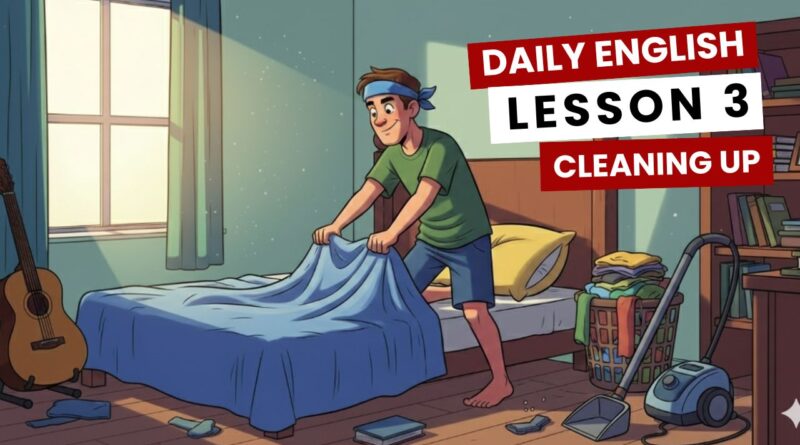
Hi, my name is Daniel. Every Saturday morning, I spend time cleaning my apartment. It’s my way of starting the weekend fresh. I usually begin by opening the windows to let in some fresh air. Then I make my bed and tidy up my bedroom. A tidy room always makes me feel more relaxed.
After that, I move to the living room. I vacuum the carpet and dust the shelves where books and little decorations collect dust during the week. I also wipe the coffee table with a damp cloth so it looks clean and shiny.
The kitchen usually takes the longest. I wash the dishes that have piled up, clean the countertops, and sweep the floor. Sometimes I mop it too, especially if there are stains or sticky spots. I also take out the trash so the apartment smells fresh.
The bathroom is my final stop. I scrub the sink, wipe the mirror, and clean the toilet. It isn’t my favorite task, but it’s important to keep the bathroom hygienic.
Once I’m finished, the whole apartment feels different. It’s brighter, fresher, and more comfortable. Cleaning up can be tiring, but it always makes me feel proud and satisfied.
🗣️ Vocabulary & Explanation
Our story begins with me saying, “Let me tell you a little story.”
I usually clean my apartment on Saturday morning. To clean (remove dirt or mess) means to make something neat and free of dust or stains. Saturday morning is when I have time, so it’s part of my weekly routine.
I start by opening the windows. To open (move something so it is no longer closed) lets in fresh air (clean air from outside). Fresh air makes the room feel new and comfortable.
Next, I make my bed. To make your bed (arrange your blanket and pillows neatly) means to prepare it so it looks tidy. Then I tidy up my room. To tidy up (put things back in their place) means to organize things so the room is neat.
In the living room, I vacuum the carpet. To vacuum (use a machine to suck up dust) is a common cleaning action for floors. I also dust the shelves. To dust (remove small dirt particles with a cloth) means to wipe away dust.
After that, I wipe the coffee table. To wipe (clean by rubbing with a cloth) makes the surface clean. I usually use a damp cloth (slightly wet piece of fabric).
The kitchen takes more time. I wash the dishes (clean dirty plates, cups, or pans with water and soap). I also clean the countertops (the flat surfaces in the kitchen). Then I sweep the floor (use a broom to push dirt away). Sometimes, I mop the floor. To mop (clean the floor with water using a mop) makes it shiny.
I also take out the trash. To take out the trash (remove garbage from the house) means to carry it outside. This keeps the apartment smelling good.
Finally, I clean the bathroom. I scrub the sink. To scrub (clean by rubbing hard) removes stains. I wipe the mirror so it is clear, and I clean the toilet.
When I finish, the apartment feels fresh. To feel fresh (clean and new) means it is pleasant and comfortable. Cleaning can be tiring, but it makes me feel satisfied (happy because I completed something).
📝 Vocabulary and Phrases
- Tidy up – put things in order.
Example: She tidied up her desk before leaving. - Vacuum – clean with a vacuum machine.
Example: I vacuum the living room every weekend. - Dust – remove fine dirt with a cloth.
Example: He dusted the shelves to keep them clean. - Wipe – clean by rubbing with a cloth.
Example: Please wipe the table after dinner. - Damp cloth – a slightly wet piece of fabric.
Example: She used a damp cloth to clean the window. - Countertop – flat surface in a kitchen.
Example: The kitchen countertop was full of groceries. - Sweep – clean the floor with a broom.
Example: I sweep the floor every morning. - Mop – wash the floor with water using a mop.
Example: He mopped the floor after spilling juice. - Scrub – clean something by rubbing hard.
Example: She scrubbed the sink until it shone. - Take out the trash – remove garbage from the house.
Example: He forgot to take out the trash last night. - Fresh air – clean air from outside.
Example: I opened the window for some fresh air. - Satisfied – feeling happy because something is done.
Example: She felt satisfied after cleaning the house.
🔁 Recap (150–200 words)
Every Saturday, Daniel spends time cleaning his apartment. He opens the windows for fresh air, makes his bed, and tidies up his room. In the living room, he vacuums the carpet, dusts the shelves, and wipes the table with a damp cloth.
The kitchen takes more work. He washes the dishes, cleans the countertops, sweeps, and sometimes mops the floor. He also takes out the trash to keep the apartment fresh.
In the bathroom, he scrubs the sink, wipes the mirror, and cleans the toilet. It’s not fun, but it’s necessary.
By the end, the apartment feels clean, fresh, and comfortable. Cleaning up is tiring, but Daniel always feels satisfied when it’s done.
📚 Glossary
- Tidy up – put things in order
- Vacuum – clean with a vacuum machine
- Dust – remove dirt with a cloth
- Wipe – clean by rubbing
- Damp cloth – slightly wet cloth
- Countertop – flat kitchen surface
- Sweep – clean with a broom
- Mop – wash the floor with a mop
- Scrub – clean by rubbing hard
- Take out the trash – remove garbage
- Fresh air – clean outside air
- Satisfied – happy after completing something
🏆 Practice Task
📝 Write 6–8 sentences about your cleaning routine. Try to use today’s words: tidy up, sweep, mop, wipe, dust, take out the trash.
If you missed the previous lesson, check out Daily English Lesson 2: Getting Up to review the morning routine.
“Well done! 🎉 Use today’s vocabulary when talking or writing, and watch your confidence grow. See you in the next lesson for more fun English practice!”